
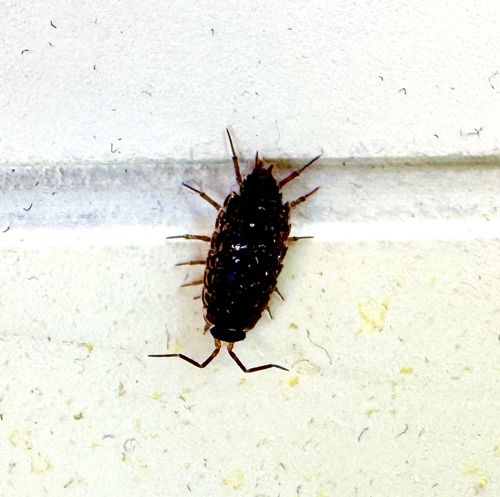
Woodlouse (or Pillbug/Sowbug)
Various species, commonly includes Porcellionides pruinosus or similar terrestrial isopods
- Order & Family
- Isopoda, various families (e.g., Porcellionidae, Armadillidiidae)
- Size
- Typically 6 to 15 mm (0.2 to 0.6 inches) in length.
Natural Habitat
Damp, dark places such as under rocks, logs, leaf litter, decaying wood, compost piles, and basements. They thrive in environments with high humidity.
Diet & Feeding
Detritivores, primarily feeding on decaying organic matter, dead plant material, fungi, and sometimes young plants or seedlings.
Behavior Patterns
Nocturnal; they are most active at night. They breathe through gills, requiring a moist environment to survive. Some species (pillbugs) can roll into a ball (conglobate) when disturbed, while others (sowbugs) cannot. They undergo direct development, meaning young hatch as miniature versions of adults.
Risks & Benefits
Generally harmless to humans and are not known to bite or carry diseases. They play a beneficial role in ecosystems as decomposers, breaking down organic matter and returning nutrients to the soil. In large numbers, they can sometimes cause minor damage to young plants in gardens or consume stored vegetables, but this is rare and usually indicates an overly damp environment.