
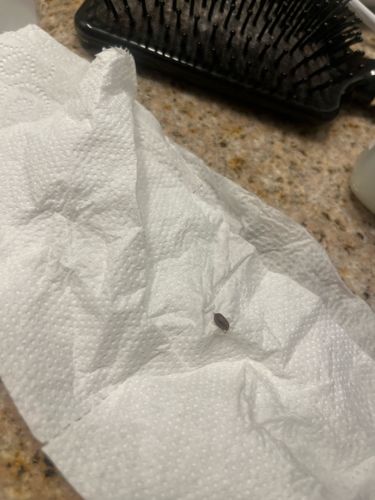
Community identification
Dog Tick (specifically an engorged nymph or adult female)
Dermacentor variabilis (American Dog Tick)
- Order & Family
- Order Ixodida, Family Ixodidae
- Size
- 3mm to 5mm unfed; up to 15mm or larger when fully engorged with blood.
Natural Habitat
Found in wooded areas, tall grass, and shrubs where they wait for hosts like dogs, deer, and humans.
Diet & Feeding
Blood (obligate hematophagy); they feed on the blood of mammals including dogs, cats, and humans.
Behavior Patterns
They exhibit a behavior called 'questing' where they hold onto grass with their back legs and reach out with front legs to latch onto passing hosts. They undergo four life stages: egg, larva, nymph, and adult.
Risks & Benefits
Risk: Known to transmit Rocky Mountain spotted fever (RMSF) and tularemia. They can also cause tick paralysis in hosts. Benefits: No direct benefits to humans, but they serve as a food source for birds and some reptiles in the ecosystem.