
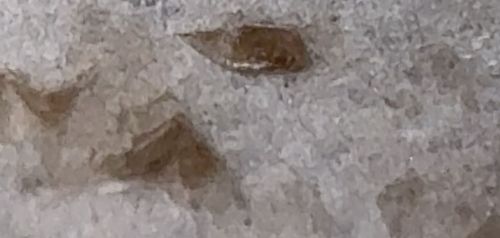
Booklouse (or Psocid)
Liposcelis spp. (Common genus for household booklice)
- Order & Family
- Order: Psocodea (formerly Psocoptera); Family: Liposcelididae
- Size
- Very small, typically 1 mm to 2 mm in length.
Natural Habitat
Found in warm, high-humidity environments indoors, such as bathrooms, kitchens, basements, and pantries. They often inhabit stored food products like flour, grains, and sugar, as well as old books and wallpaper.
Diet & Feeding
They feed on microscopic fungi and mold that grow on damp surfaces or food items. They will infest stored grains, cereals, flour, and sugar (as seen in the image) if moisture is present.
Behavior Patterns
These insects are wingless and run rapidly rather than flying. They are often found in large numbers where mold or humidity is high. They do not bite or sting.
Risks & Benefits
Risks: They are a nuisance pest that contaminates stored food products, rendering them unfit for consumption. Their presence usually indicates a moisture or mold problem. Benefits: None in a household setting, though they act as scavengers in nature.