
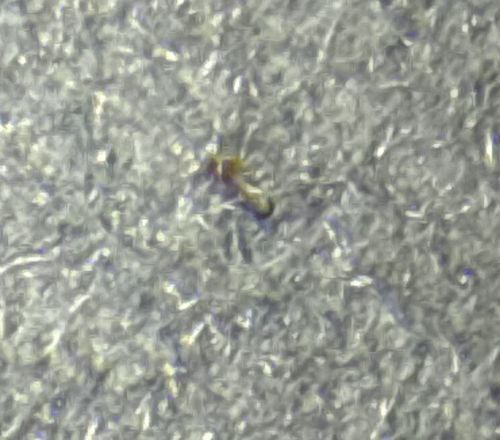
Community identification
Booklouse (or Psocid)
Liposcelis spp. (Commonly)
- Order & Family
- Order: Psocodea (formerly Psocoptera), Family: Liposcelididae
- Size
- Very small, typically 1 to 2 millimeters in length.
Natural Habitat
They thrive in humid, damp environments indoors, such as basements, bathrooms, or near windowsills. They are often found in books, papers, or stored food containers.
Diet & Feeding
They feed on microscopic molds, fungi, starches, and organic debris found in glues (like book bindings), grains, and wallpaper paste.
Behavior Patterns
Booklice are wingless or have tiny wings and do not fly. They move in short, jerky runs. They reproduce quickly in high-humidity conditions without mating (parthenogenesis).
Risks & Benefits
They do not bite humans or pets and do not transmit diseases, so they are generally harmless. However, large populations can contaminate stored food products and be a nuisance, and their presence often indicates a moisture or mold problem in the home.