
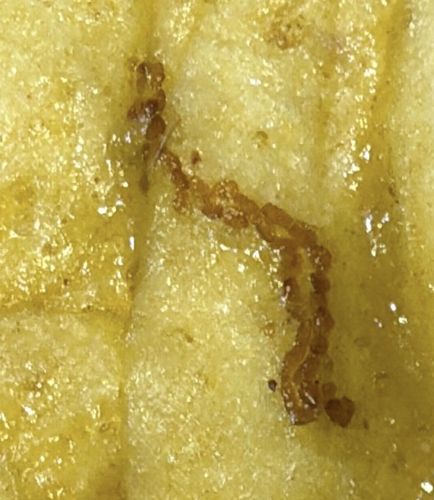
Fungus Gnat (Larva)
Bradysia spp. (Most common genus)
- Order & Family
- Order: Diptera, Family: Sciaridae
- Size
- Larvae grow to about 5-8 mm (approx 1/4 inch) in length.
Natural Habitat
Found in damp soil rich in organic matter, often in overwatered potted plants, greenhouses, and high-humidity environments.
Diet & Feeding
Larvae feed primarily on fungi and decaying organic matter in the soil, but will also chew on plant root hairs and seedling stems if fungal food sources are scarce.
Behavior Patterns
Larvae live in the top few inches of soil. They are legless with a distinctive shiny black head capsule (though hard to see in this desiccated specimen) and a translucent white-to-clear body that darkens with food. They eventually pupate in the soil before emerging as flying adults.
Risks & Benefits
Risks: Larvae can damage roots, stunting growth or killing seedlings and young plants; adults are a nuisance indoors. Benefits: In wild ecosystems, they aid in decomposition and nutrient cycling.