
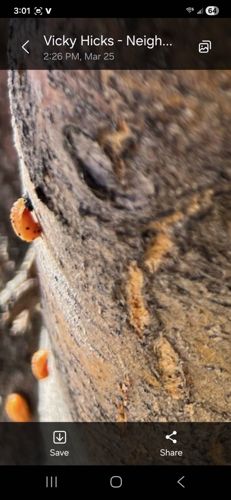
Ladybug pupa (Ladybird Beetle)
Harmonia axyridis (and other Coccinellidae species)
- Order & Family
- Order Coleoptera, Family Coccinellidae
- Size
- 5 mm to 10 mm in length
Natural Habitat
Found on trees, shrubs, and garden plants where prey like aphids are abundant; widely distributed across temperate regions.
Diet & Feeding
The pupal stage does not eat; however, both the larvae (prior state) and adults (next state) are voracious predators of soft-bodied insects like aphids, scale insects, and mites.
Behavior Patterns
This is the stationary life stage between the larva and adult. The insect attaches its tail end to a surface (like tree bark) and undergoes metamorphosis. During this stage, it is vulnerable and immobile, lasting about 3 to 12 days.
Risks & Benefits
Highly beneficial to the ecosystem and gardeners as they provide natural pest control for agricultural crops. They pose no significant risk to humans, though some species (like the Asian Lady Beetle) can be a nuisance if they congregate in homes during winter.