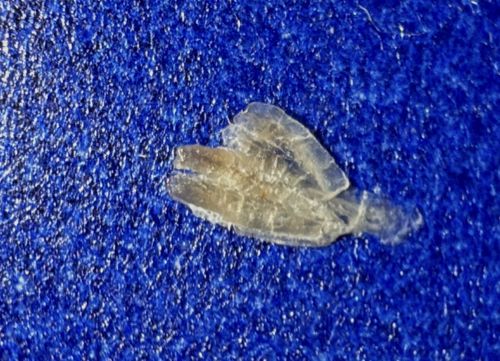
Tapeworm Segment (Proglottid)
Scientific Name: Dipylidium caninum (most likely candidate based on appearance)
Order & Family: Order: Cyclophyllidea, Family: Dipylidiidae
Size: Segments are typically 3–12 mm long and resemble grains of rice or cucumber seeds when fresh; they shrink and become sesame-seed-like when dried.
Natural Habitat
The adult tapeworm lives in the small intestine of dogs and cats. These detached segments are often found in pet bedding, on fur near the anus, or in feces.
Diet & Feeding
The adult tapeworm absorbs nutrients through its skin (tegument) from the host's digested food within the intestine.
Behavior Patterns
These segments (proglottids) are actually egg-filled packets. They detach from the main worm body and are motile when fresh, crawling out of the host's anus or being passed in stool to release eggs into the environment.
Risks & Benefits
Risks: Can cause mild gastrointestinal upset, anal itching (scooting), and weight loss in pets. While zoonotic (can infect humans, usually children who accidentally ingest an infected flea), human infection is rare and generally mild. No benefits.
Identified on: 2/8/2026