
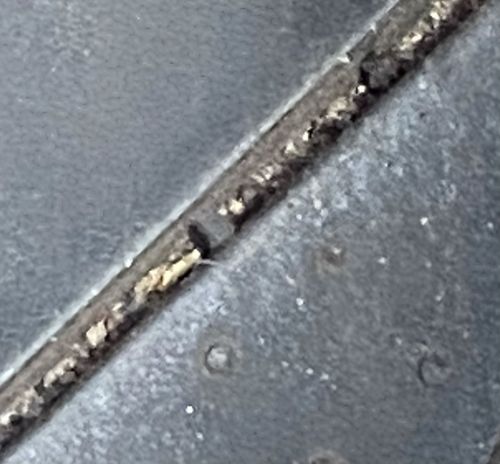
Community identification
Louse (specifically, a nymph or egg case)
Pediculus humanus capitis (for head lice)
- Order & Family
- Order: Psocodea (formerly Phthiraptera), Family: Pediculidae
- Size
- Nymphs are about 1 mm to 1.5 mm long; eggs (nits) are about 0.8 mm.
Natural Habitat
Found exclusively on human hair and scalps where they maintain close proximity to the skin for warmth and food.
Diet & Feeding
Obligate hematophages; they feed exclusively on human blood several times a day.
Behavior Patterns
They are wingless and cannot jump or fly; they move by crawling from hair to hair. Females glue eggs (nits) to hair shafts near the scalp. They cannot survive for more than 24-48 hours off a human host.
Risks & Benefits
Risks include intense itching (pruritus) caused by an allergic reaction to the saliva, which can lead to secondary skin infections from scratching. They are generally considered a nuisance rather than a vector for major diseases (unlike the body louse).