
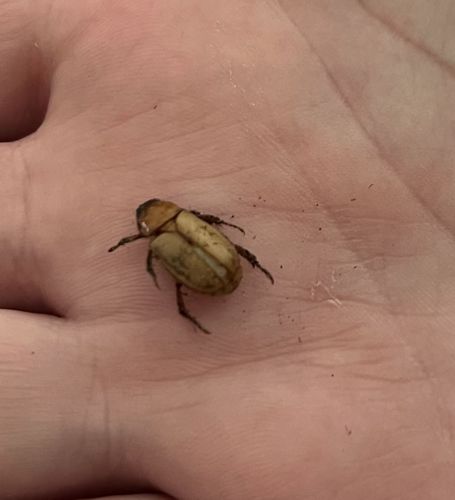
Scarab Beetle (likely a 'June Beetle' or 'May Beetle')
Difficult to determine exact species from the image alone, but likely in genera like Phyllophaga or Popillia.
- Order & Family
- Order: Coleoptera, Family: Scarabaeidae
- Size
- Most common North American species range from 12 mm to 25 mm (0.5 to 1 inch) in length. Some tropical species can be much larger.
Natural Habitat
Found in a wide range of habitats including forests, grasslands, agricultural fields, gardens, and urban areas. Larvae live in soil.
Diet & Feeding
Adult scarab beetles typically feed on leaves, flowers, and fruits, or sometimes pollen and nectar. Larvae (grubs) primarily feed on plant roots, decaying organic matter, or sometimes fungi.
Behavior Patterns
Many scarab beetles are nocturnal, attracted to lights at night. They can be clumsy flyers. Larvae live underground and feed on roots, while adults often feed on foliage or flowers. The life cycle can range from one to several years depending on the species and environmental conditions.
Risks & Benefits
Risks: Some species, particularly their larvae (grubs), can be significant agricultural and garden pests by feeding on the roots of turf, crops, and ornamental plants. Benefits: Adult beetles can be pollinators. Both adults and larvae can be a food source for birds, mammals, and other insects, contributing to the food chain. Decomposers among scarabs help in nutrient cycling.