
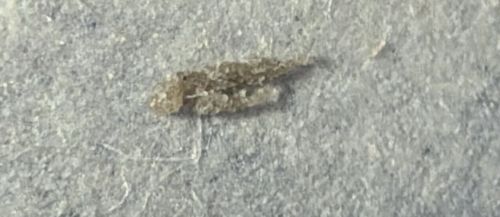
Household Casebearer or Plaster Bagworm
Phereoeca uterella (sometimes referred to as Phereoeca allutella)
- Order & Family
- Order: Lepidoptera, Family: Tineidae
- Size
- Larval case is typically 8–13 mm (0.3–0.5 inches) long.
Natural Habitat
Commonly found in homes, garages, and closets, particularly in humid climates like Florida and the tropics; often spotted on walls, baseboards, or under furniture.
Diet & Feeding
The larvae feed on keratin-found in wool, hair, and fur-as well as spider webs, dead insects, and general house dust or lint.
Behavior Patterns
The larva builds a flattened, pumpkin-seed-shaped protective case out of silk and debris (sand, dust, lint) which it carries around. It has openings at both ends, allowing the larva to turn around inside and feed from either side without leaving the case.
Risks & Benefits
Risks: Generally considered a minor nuisance pest; they do not bite or sting but can damage wool clothing or rugs if present in large numbers. Benefits: None significant to humans, though they do clean up small amounts of dead insects and spider webs.