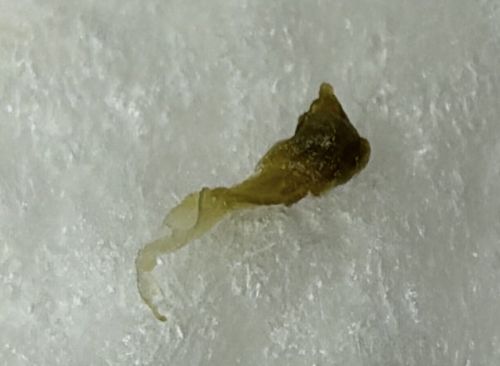
Slug (dried or residue)
Scientific Name: Gastropoda (Class level identification)
Order & Family: Order: Stylommatophora; Families vary (e.g., Limacidae, Arionidae)
Size: Varies significantly by species; typically 1 cm to 15 cm when alive, but dried specimens shrink considerably.
Natural Habitat
Damp environments such as gardens, under rocks, in leaf litter, and basements. They thrive in moist conditions and avoid direct sunlight.
Diet & Feeding
Herbivorous or omnivorous; feeds on decaying plant matter, living plants (leaves, fruits, vegetables), fungi, and occasionally dead insects or animal feces.
Behavior Patterns
Nocturnal activity to avoid desiccation. They produce mucus slime trails to move. When threatened or dried out (as likely seen in the image), they contract their bodies to conserve moisture.
Risks & Benefits
Risks: Major garden pests that damage crops; can carry parasites like rat lungworm (if ingested raw). Benefits: Decomposers that help break down organic matter and recycle nutrients into the soil.
Identified on: 2/19/2026