
Community identification
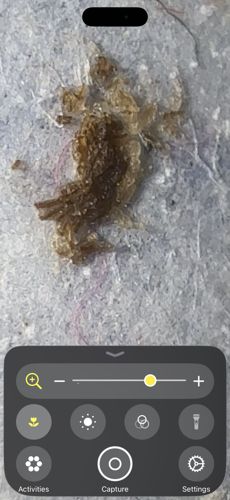
Louse (Dried/Dead)
Pediculus humanus capitis or Phthirus pubis
- Order & Family
- Order Psocodea (formerly Phthiraptera), Family Pediculidae or Pthiridae
- Size
- 1mm to 3mm
Natural Habitat
Human body hair or clothing; this specimen appears to be dried organic matter potentially containing remains of a louse or similar parasite.
Diet & Feeding
Hematophagy (feeds exclusively on human blood).
Behavior Patterns
Obligate parasites that spend their entire life cycle on the host. They are unable to fly or jump and move by crawling; they glue eggs (nits) to hair shafts or clothing fibers.
Risks & Benefits
Risks include intense itching, skin irritation, and secondary bacterial infections from scratching. Head lice do not transmit disease, but body lice can transmit epidemic typhus and trench fever. There are no ecological benefits to humans.