
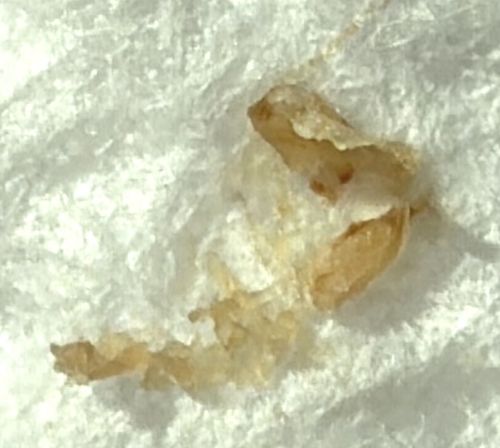
Bed Bug (Cast Skin / Molt)
Cimex lectularius
- Order & Family
- Hemiptera: Cimicidae
- Size
- 1 mm to 5 mm (Adults are larger, about apple-seed size; these cast skins, or exuviae, vary depending on the nymphal stage, usually 1-4 mm)
Natural Habitat
Exclusively indoor environments, particularly in and around human sleeping areas such as mattress seams, bed frames, box springs, and headboards. They hide in cracks and crevices during the day.
Diet & Feeding
Hematophagous (feed exclusively on the blood of warm-blooded animals, primarily humans).
Behavior Patterns
Bed bugs go through five nymphal stages before reaching adulthood. At each stage, they must feed on blood and then shed their exoskeleton (molt) to grow larger. The object in the image appears to be one of these shed skins (exuviae), which are often found in clusters near harborages. They are nocturnal feeders.
Risks & Benefits
Risks: Bed bug bites cause itching, red welts, allergic reactions, and significant psychological distress (anxiety, insomnia). While they are not known to transmit disease, infestations can be difficult and expensive to eradicate. Benefits: None known to humans or the general ecosystem.