Tapeworm Segment (Proglottid)
Scientific Name: Dipylidium caninum (most common species in pets)
Order & Family: Order: Cyclophyllidea; Family: Dipylidiidae
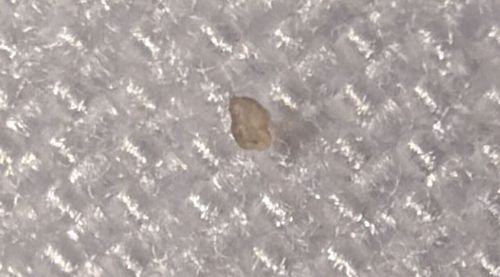
Size: Typically resembles a grain of rice or cucumber seed when fresh; shrinks to a sesame seed size (1-3mm) when dried.
Natural Habitat
Adults live in the intestines of dogs and cats; segments are found in pet fur, bedding, or areas where pets sleep.
Diet & Feeding
The adult tapeworm absorbs nutrients digested by the host animal; the segment itself does not eat but contains egg packets.
Behavior Patterns
Segments detach from the main worm inside the host and exit via the anus. They are mobile when fresh, crawling to spread eggs, but dry into hard, yellowish specks resembling sesame seeds.
Risks & Benefits
Risk: Indicates a parasite infection in pets which requires veterinary treatment. While generally low risk to humans, accidental ingestion of an infected flea (the intermediate host) can lead to human infection, particularly in children.
Identified on: 3/8/2026