
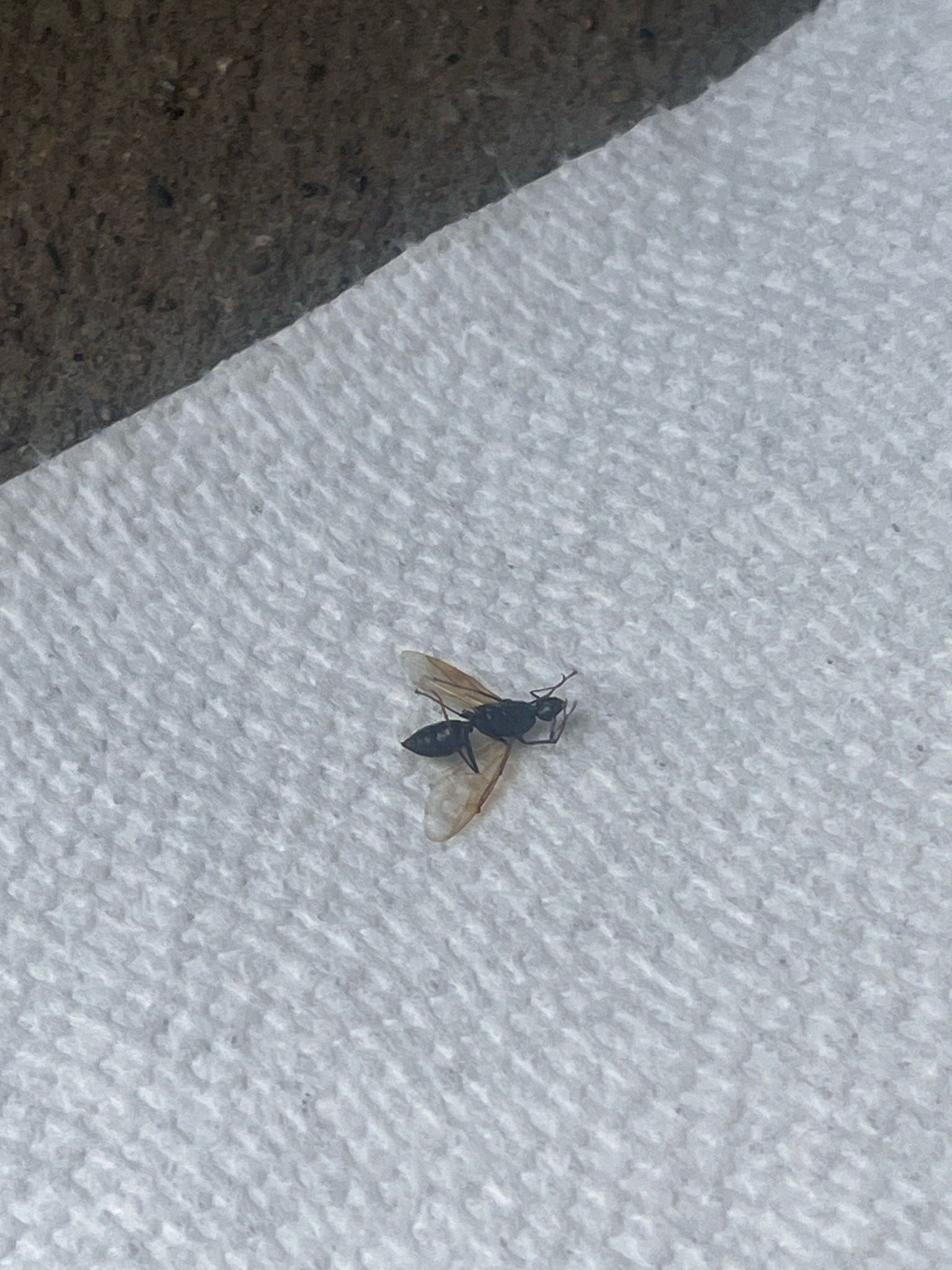
Community identification
Winged Carpenter Ant
Camponotus
- Order & Family
- Hymenoptera: Formicidae
- Size
- 1/4 to 1/2 inch (6 to 13 mm) for winged swarmers
Natural Habitat
Nests in moist, decaying wood such as dead logs and tree stumps, or indoors in wall voids, insulation, and wooded structures.
Diet & Feeding
Opportunistic omnivores; they eat plant juices, honeydew from aphids, and other insects. They do not eat wood, but excavate it for nesting.
Behavior Patterns
The winged individuals (alates) emerge in spring or summer for 'nuptial flights' to mate and found new colonies. They are most active at night.
Risks & Benefits
Benefits the ecosystem by breaking down dead wood. Social risks include structural damage to homes if a nest remains untreated; they can also give a painful nip but do not sting.