Common Tapeworm / Dog Tapeworm (proglottid)
Scientific Name: Dipylidium caninum
Order & Family: Order Cyclophyllidea, Family Dipylidiidae
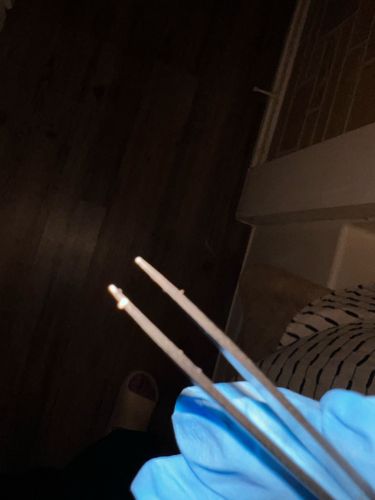
Size: Proglottid segments are 3 to 12 mm long (resembling a grain of rice or cucumber seed).
Natural Habitat
Adults live in the small intestines of dogs, cats, and occasionally humans. Proglottids (segments) are found in feces, on fur, or in bedding.
Diet & Feeding
Absorbs nutrients directly from the host's semi-digested food through its skin (integument).
Behavior Patterns
The proglottid is a reproductive packet that can crawl independently when fresh. It eventually dries out and releases eggs to be eaten by flea larvae, continuing the life cycle.
Risks & Benefits
Pathogenic risk to pets and humans if accidentally ingested (usually via a flea). Generally low risk, but can cause abdominal discomfort or itchiness. No ecological benefits to the host.
Identified on: 3/25/2026