
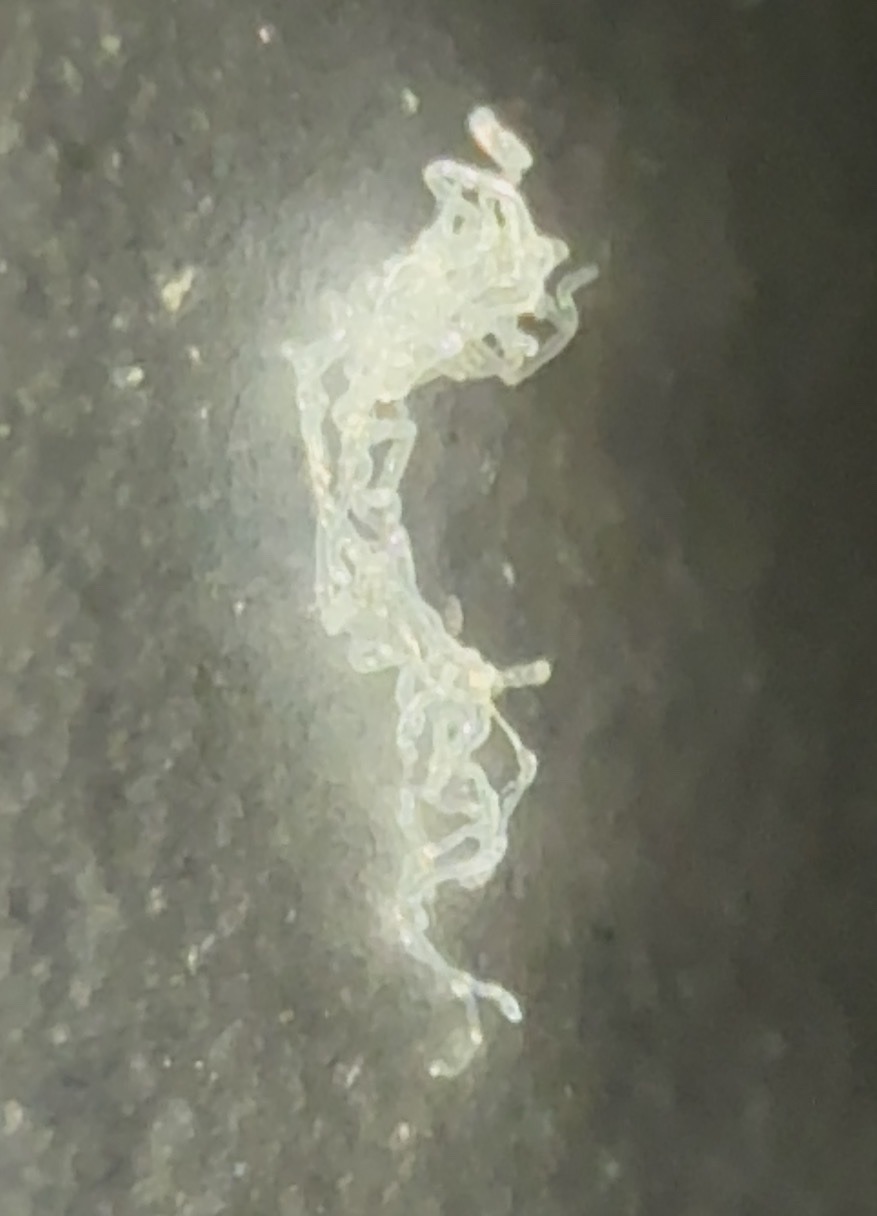
Community identification
Chironomid eggs
Family Chironomidae
- Order & Family
- Order: Diptera; Family: Chironomidae
- Size
- Egg masses are typically 5mm to 20mm in length; individual eggs are microscopic.
Natural Habitat
Found on the surface of freshwater bodies like ponds, lakes, and slow-moving streams, or attached to submerged vegetation and hard surfaces near water.
Diet & Feeding
Eggs do not feed; larvae (bloodworms) typically feed on organic debris, algae, and microorganisms.
Behavior Patterns
The eggs are laid in a protective gelatinous matrix or 'rope' that expands in water. They hatch into larvae that often live in the bottom sediment before pupating and emerging as adult non-biting midges.
Risks & Benefits
They are harmless to humans as they do not bite; they are a vital food source for fish and birds and help cycle nutrients in aquatic ecosystems.