Scabies Mite (Burrow)
Scientific Name: Sarcoptes scabiei var. hominis
Order & Family: Order: Sarcoptiformes, Family: Sarcoptidae
Size: Microscopic; females are 0.30–0.45 mm long and 0.25–0.35 mm wide; males are about half that size.
Natural Habitat
The epidermis (outer layer) of human skin, particularly in folds like between fingers, wrists, armpits, and groin areas.
Diet & Feeding
Feeds on dissolved human tissues and blood, though they do not strictly suck blood like ticks; they consume the skin cells and fluids created by lysis.
Behavior Patterns
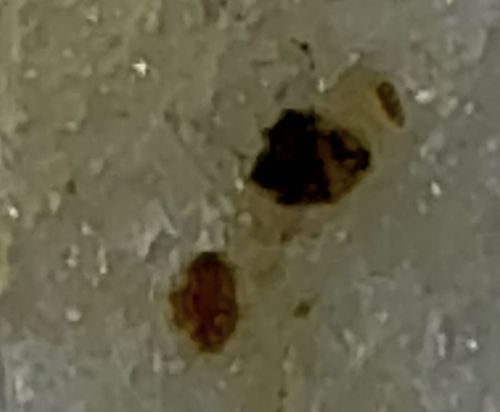
These mites burrow into the upper layer of the skin to live and deposit eggs. The female creates a serpiginous (winding) tunnel known as a burrow (often visible as a tiny grey or skin-colored line ending in a black dot, which is the mite). They are active primarily at night, which correlates with intense itching.
Risks & Benefits
Risks: Highly contagious skin infestation causing intense itching (especially at night) and a pimple-like rash. Scratching can lead to secondary bacterial infections like impetigo. Benefits: None to humans or ecosystems; strictly a parasite.
Identified on: 2/9/2026