
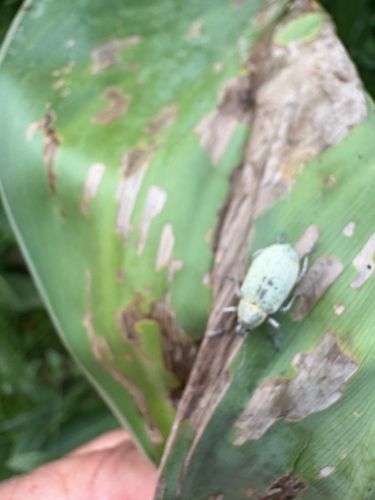
Green Immigrant Leaf Weevil
Polydrusus sericeus (or related species in Polydrusus/Philopedon, given the common name often refers to multiple green weevil species, but P. sericeus is a strong candidate given the appearance and prevalence of 'Green Immigrant Leaf Weevil' in various regions)
- Order & Family
- Order: Coleoptera, Family: Curculionidae
- Size
- Typically 5-8 mm in length
Natural Habitat
Gardens, nurseries, agricultural fields, and natural areas where host plants are present. They are often found on broadleaf plants.
Diet & Feeding
Adults feed on the leaves of a wide variety of plants, including ornamental plants, fruit trees, and various herbaceous plants. Larvae feed on plant roots.
Behavior Patterns
Adult weevils are active during the day and feed on leaves. Females lay eggs in crevices of host plants. Larvae develop in the soil, feeding on roots, and then pupate in the soil before emerging as adults. They typically move slowly.
Risks & Benefits
Risks: These weevils can be considered a pest, especially in agricultural and horticultural settings, due to their feeding on plant foliage and roots, which can cause significant damage to crops and ornamental plants. Benefits: They serve as a food source for various predators and parasites, contributing to the food web. However, their pest status often outweighs any ecological benefits from a human perspective.