
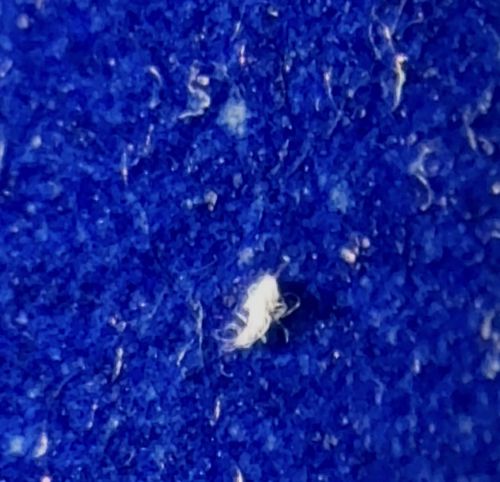
Body Louse (or possibly Head Louse nymph)
Pediculus humanus humanus (or Pediculus humanus capitis)
- Order & Family
- Order: Psocodea (formerly Phthiraptera), Family: Pediculidae
- Size
- 2.0 to 3.5 mm (Adults), Nymphs are smaller (0.8 - 2.0 mm)
Natural Habitat
Exclusively along the hair shafts or close to the skin of human hosts (head lice) or in the seams of clothing and bedding (body lice). They thrive in warm environments close to the human body.
Diet & Feeding
Hematophagous (blood-sucking); they feed entirely on human blood, needing to take meals several times a day.
Behavior Patterns
They undergo incomplete metamorphosis (egg/nit, nymph, adult). They are wingless and cannot jump or fly; they move by crawling relatively quickly. Body lice are distinct in that they attach their eggs to clothing fibers rather than hair. They tend to aggregate in seams of clothing when not feeding.
Risks & Benefits
Risks: Infestations (pediculosis) cause intense itching (pruritus) and skin irritation. While head lice are nuisance pests that do not typically spread disease, body lice are potential vectors for serious diseases such as typhus, trench fever, and relapsing fever. Benefits: None known in the current ecosystem.