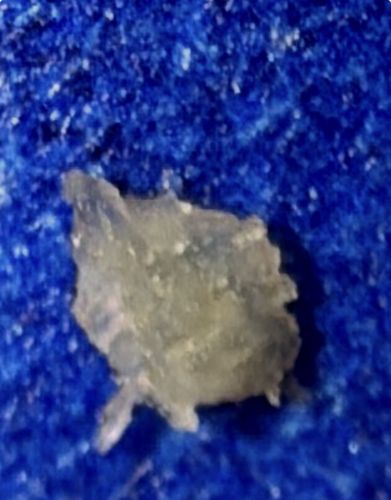
Scabies Mite (or possibly dry skin flake/artifact)
Scientific Name: Sarcoptes scabiei
Order & Family: Order: Sarcoptiformes, Family: Sarcoptidae
Size: Microscopic; females are 0.3–0.45 mm long and 0.25–0.35 mm wide; males are slightly smaller. (Note: Only visible to the naked eye as a tiny speck, if at all).
Natural Habitat
The epidermis (outer layer) of human and animal skin. They burrow into the stratum corneum to live and deposit eggs.
Diet & Feeding
Feeds on human skin cells and fluids found within the epidermis.
Behavior Patterns
These mites are obligate parasites. Females burrow into the skin to lay eggs, creating serpentine burrows. Larvae hatch and travel to the skin surface to mature. The life cycle takes about 10-17 days.
Risks & Benefits
Risks: Highly contagious and causes Scabies, a condition characterized by intense itching (especially at night) and a pimple-like skin rash. Scratching can lead to secondary bacterial infections like sores or impetigo. No known ecosystem benefits.
Identified on: 2/8/2026