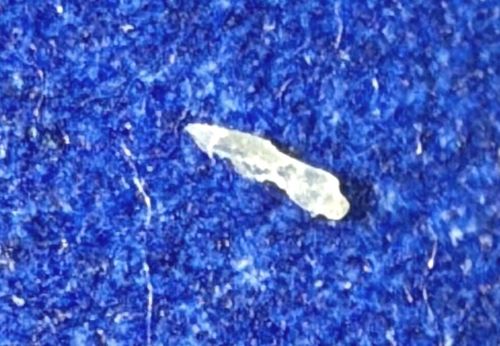
Body Louse or Head Louse (Nit/Egg case)
Scientific Name: Pediculus humanus humanus (or Pediculus humanus capitis)
Order & Family: Order: Phthiraptera, Family: Pediculidae
Size: Nits (eggs) are oval and tiny, about 0.8 mm by 0.3 mm. Adults are 2.5-3.5 mm long.
Natural Habitat
Typically found on human clothing (usually adjacent to the skin) for body lice, or on strands of hair near the scalp for head lice.
Diet & Feeding
Adult lice feed exclusively on human blood. The object in the image appears to be an empty nit casing or an undeveloped egg, which does not feed.
Behavior Patterns
Lice cement their eggs (nits) firmly to hair shafts or clothing fibers. Nymphs hatch after 6-9 days and undergo three molts before becoming adults.
Risks & Benefits
Risks: Body lice are vectors for diseases like typhus, trench fever, and relapsing fever. Head lice cause intense itching and social stigma but do not transmit disease. Benefits: None known to humans.
Identified on: 2/26/2026