
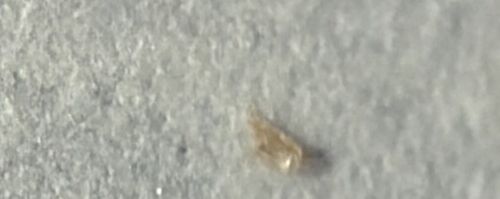
Booklouse (or Psocid)
Liposcelis spp. (Common genus for household booklice)
- Order & Family
- Order: Psocodea (formerly Psocoptera); Family: Liposcelididae
- Size
- Very small, typically 1 mm to 2 mm in length.
Natural Habitat
Found in high-humidity indoor environments, often near books, papers, cardboard boxes, damp wall voids, or pantries where microscopic mold grows.
Diet & Feeding
They feed on microscopic mold and fungi, as well as starch found in book bindings, wallpaper glue, and grains.
Behavior Patterns
They are wingless, soft-bodied insects that run quickly but do not fly. They thrive in damp conditions and reproduce rapidly in humid environments completely unseen until populations are large.
Risks & Benefits
Risks: harmless to humans (they do not bite or spread disease), but their presence indicates excessive moisture and potential mold issues in the home. They can contaminate stored food products. Benefits: None in a household context, though they are part of the decomposition cycle in nature.