
Community identification
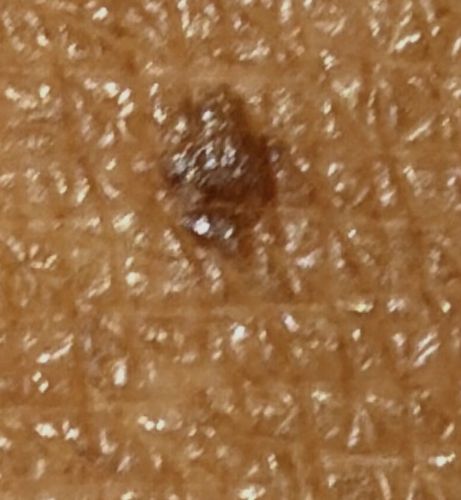
Scabies Mite (burrow)
Sarcoptes scabiei var. hominis
- Order & Family
- Order: Sarcoptiformes; Family: Sarcoptidae
- Size
- Microscopic; females are 0.3-0.45 mm long and 0.25-0.35 mm wide; males are about half this size. The visible 'spot' in the image is often the burrow entrance or the mite itself under the skin surface.
Natural Habitat
The epidermis (outer layer) of human skin, particularly in areas like finger webs, wrists, elbows, and axillary folds.
Diet & Feeding
Tissue fluid and skin cells within the human epidermis.
Behavior Patterns
Obligate parasites that burrow into the upper layer of the skin to live and deposit eggs. The burrowing activity is intense at night, causing severe nocturnal itching. The lifecycle from egg to adult takes about 10-15 days.
Risks & Benefits
Risks: Causes scabies, a highly contagious skin infestation characterized by intense itching and a pimple-like rash. Secondary bacterial infections (like impetigo) can occur due to scratching. Benefits: None; they are strictly parasitic to humans.