
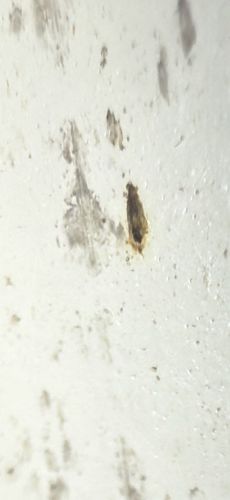
Household Casebearer (also known as the Plaster Bagworm or Case-bearing Clothes Moth)
Phereoeca uterella (sometimes classified as Phereoeca allutella)
- Order & Family
- Order: Lepidoptera, Family: Tineidae
- Size
- Larval case is typically 8-13 mm long (approx. 0.3-0.5 inches)
Natural Habitat
Typically found indoors in warm, humid climates. They attach to walls, especially near baseboards, in corners, under furniture, or inside closets and garages. They are common in Florida and other tropical/subtropical regions.
Diet & Feeding
The larvae feed on keratin and detritus, including spider webs, old insect skins, wool, human hair, pet fur, and lint.
Behavior Patterns
The larva constructs a flat, pumpkin-seed-shaped protective case out of silk and potential camouflage materials (sand, soil, debris). It drags this case around as it moves. The larva has openings at both ends of the case allowing it to feed and move from either side. When ready to pupate, it attaches the case to a vertical surface.
Risks & Benefits
Generally considered a nuisance pest rather than a danger. They do not bite or sting humans. However, in large numbers, they can cause minor damage to woolen fabrics, rugs, or clothing, though they primarily feed on old spider webs and dust bunnies. They are indicators of high humidity or dusty conditions.