
Community identification
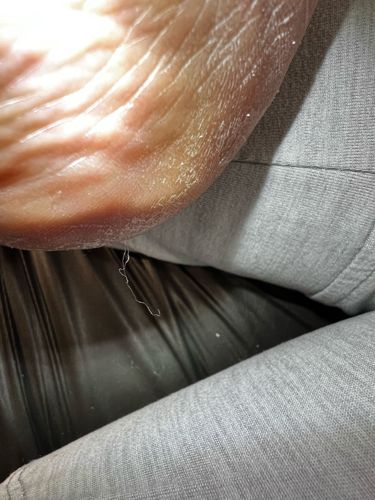
Pinworm (likely identification)
Enterobius vermicularis
- Order & Family
- Order: Rhabditida, Family: Enterobiidae
- Size
- Females: 8–13 mm long; Males: 2–5 mm long.
Natural Habitat
The human large intestine, cecum, and the perianal area where eggs are deposited.
Diet & Feeding
Intestinal contents and cellular debris within the human host.
Behavior Patterns
Nocturnal activity: Gravid females migrate out of the anus at night to deposit eggs on the surrounding skin, which often causes intense itching (pruritus ani).
Risks & Benefits
Risks include anal itching, disturbed sleep, and secondary bacterial infections from scratching. They are highly contagious via fecal-oral transmission. There are no known benefits.