Booklouse (or Psocid)
Scientific Name: Liposcelis spp.
Order & Family: Order: Psocodea (formerly Psocoptera), Family: Liposcelididae
Size: Very small, typically 1 mm to 2 mm in length.
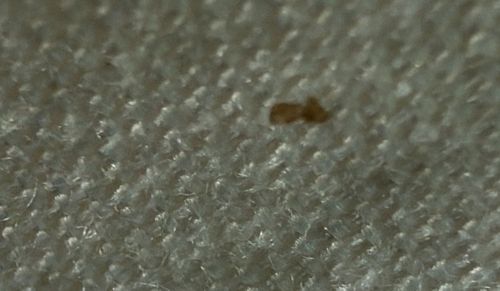
Natural Habitat
Found indoors in damp, warm, and undisturbed areas. Common on books, old paper, cardboard boxes, in cupboards, and occasionally on furniture or bedding if humidity is high.
Diet & Feeding
Feeds on microscopic fungi, molds, starches, and organic debris found in glues, book bindings, and damp paper.
Behavior Patterns
They do not bite humans or animals. They move in a jerky, run-and-stop motion. They thrive in high humidity environments which promote the mold growth they eat.
Risks & Benefits
Risks: Generally harmless to humans (no bites, no diseases transmitted). Can be a nuisance pest in large numbers and may cause allergic reactions in sensitive individuals. They can damage books and stored food products by contaminating them. Benefits: None significant in a household context, though they help break down organic matter in nature.
Identified on: 2/12/2026