
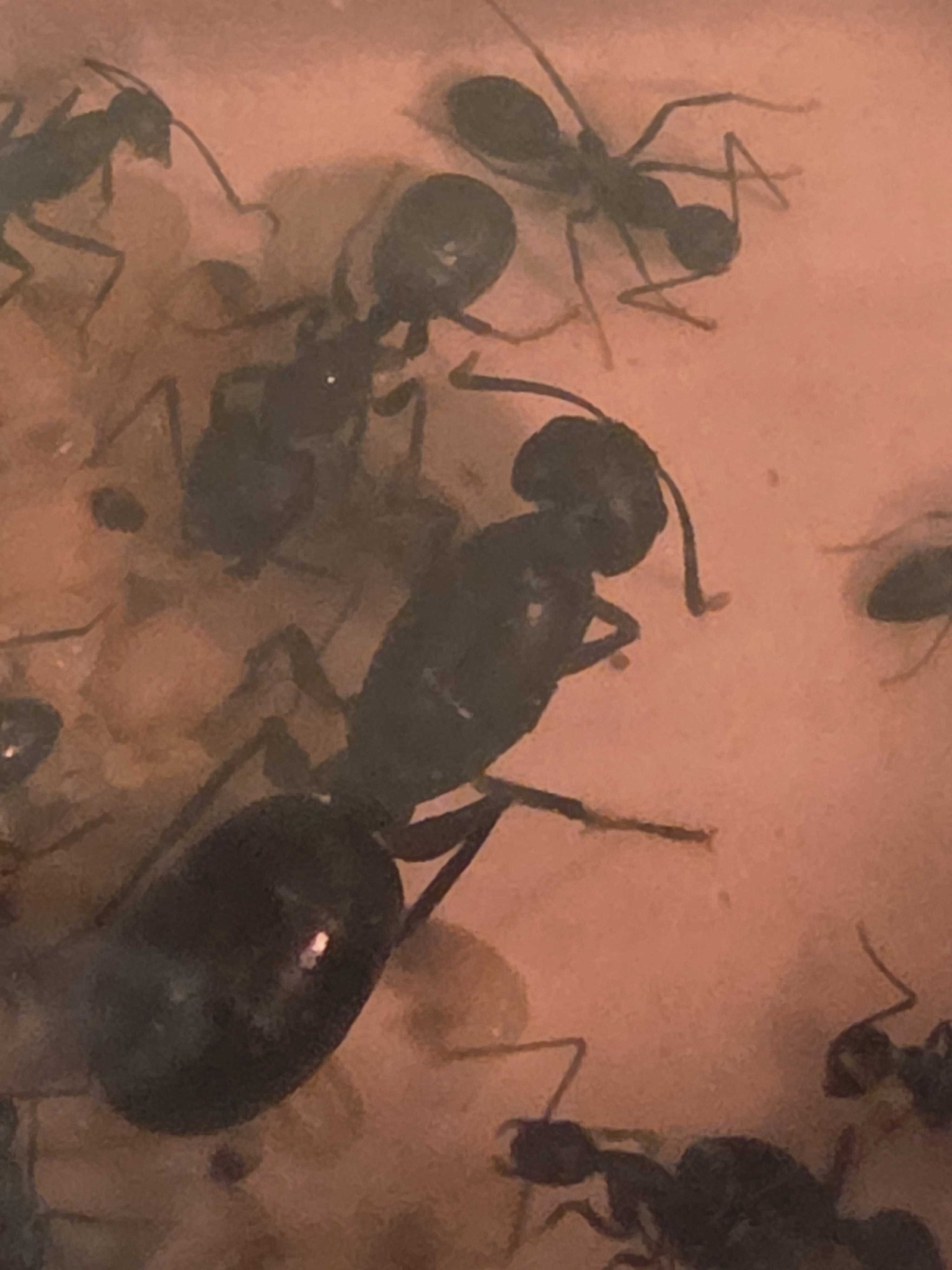
Community identification
Black Carpenter Ant
Camponotus pennsylvanicus
- Order & Family
- Hymenoptera: Formicidae
- Size
- Workers range from 6 to 13 mm; queens can reach up to 20 mm in length.
Natural Habitat
Nests are typically found in moist or decaying wood, including tree stumps, logs, and structural timbers of buildings.
Diet & Feeding
Omnivorous; they consume plant juices, honeydew from aphids, other insects, and sugary or protein-rich household foods.
Behavior Patterns
They are primarily nocturnal foragers. Unlike termites, they do not eat wood but excavate smooth galleries within it to house their colonies through a complex social hierarchy.
Risks & Benefits
Risks include significant structural damage to wooden buildings. Benefits include their role as decomposers, breaking down dead wood in forest ecosystems and preying on other insect pests.