
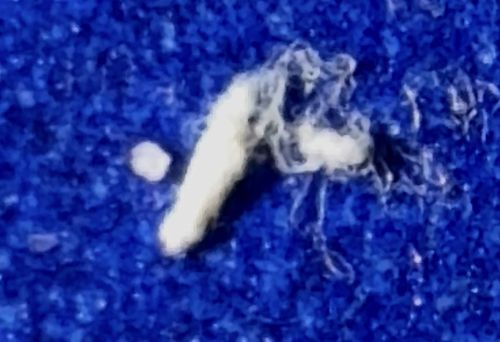
Casemaking Clothes Moth Larva
Tinea pellionella
- Order & Family
- Lepidoptera / Tineidae
- Size
- Larvae grow up to roughly 10 mm (3/8 inch) long; the silken case they carry grows with them.
Natural Habitat
Found indoors, typically in dark, undisturbed areas like closets, under rugs, in attics, or behind furniture where natural fibers (wool, silk, fur) accumulate.
Diet & Feeding
Feeds on animal-based natural fibers such as wool, fur, silk, feathers, felt, and leather. They will also eat accumulated lint, hair, and sometimes synthetic fabrics if they are soiled with food stains or body oils.
Behavior Patterns
Unlike the webbing clothes moth, this larva carries a portable, tube-like case made of silk and spun with fibers from the material it is eating. It feeds from inside the case and drags it along as it moves. When ready to pupate, it often climbs up walls or furniture to attach its case in a secure spot.
Risks & Benefits
They are a significant household pest. The larvae cause damage by eating holes in expensive clothing (especially wool and cashmere), rugs, upholstery, and tapestries. They do not bite or sting humans and carry no known diseases, but the destruction of property can be costly.