
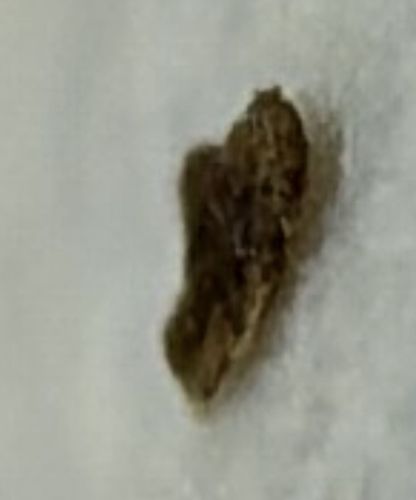
Household Casebearer (often called Plaster Bagworm)
Phereoeca uterella
- Order & Family
- Order: Lepidoptera, Family: Tineidae
- Size
- Typically 7-13 mm long (specifically the case itself)
Natural Habitat
Commonly found indoors in humid areas like Florida and tropical climates. They are often seen on walls, in closets, under furniture, or in corners where dust and fibers accumulate.
Diet & Feeding
The larvae feed on keratin and detritus, including wool, hair, lint, spider webs, dead insects, and old plaster or paint (though they don't eat the actual plaster, just the organic matter on it).
Behavior Patterns
The most distinctive behavior is that the larva constructs a protective, flattened, spindle-shaped case out of silk and debris (like sand, soil, and insect droppings) which it carries around. It has openings at both ends so the larva can turn around inside without leaving the case. They are often seen slowly dragging this case along walls.
Risks & Benefits
Risks: Generally considered a nuisance pest rather than a danger. They do not bite or sting humans. However, in large numbers, they can damage fabrics like wool or hair-based textiles. Benefits: They act as scavengers, cleaning up spider webs and dead insects, though this benefit is usually outweighed by their unwelcome presence in homes.