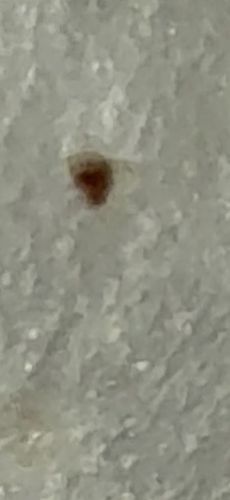
Booklouse (or Psocid)
Scientific Name: Liposcelis spp. (Common household genus)
Order & Family: Psocodea: Liposcelididae
Size: Very small: typically 1 mm to 2 mm in length.
Natural Habitat
Booklice thrive in high-humidity areas, often found on damp plaster, starchy paste (wallpaper), old books, cardboard boxes, and moldy food containers.
Diet & Feeding
They feed on microscopic molds, fungi, starch, damp paper, book bindings, and occasionally stored grains or cereals.
Behavior Patterns
These are wingless, soft-bodied insects that run quickly but jerkily. They do not bite or sting. They are often seen in groups near moisture sources or where mold is beginning to grow.
Risks & Benefits
They pose no direct threat to human health (they do not bite or transmit disease). However, they can be persistent pantry pests, contaminating stored dry goods, and their presence usually indicates an underlying humidity or mold problem in the home.
Identified on: 3/11/2026