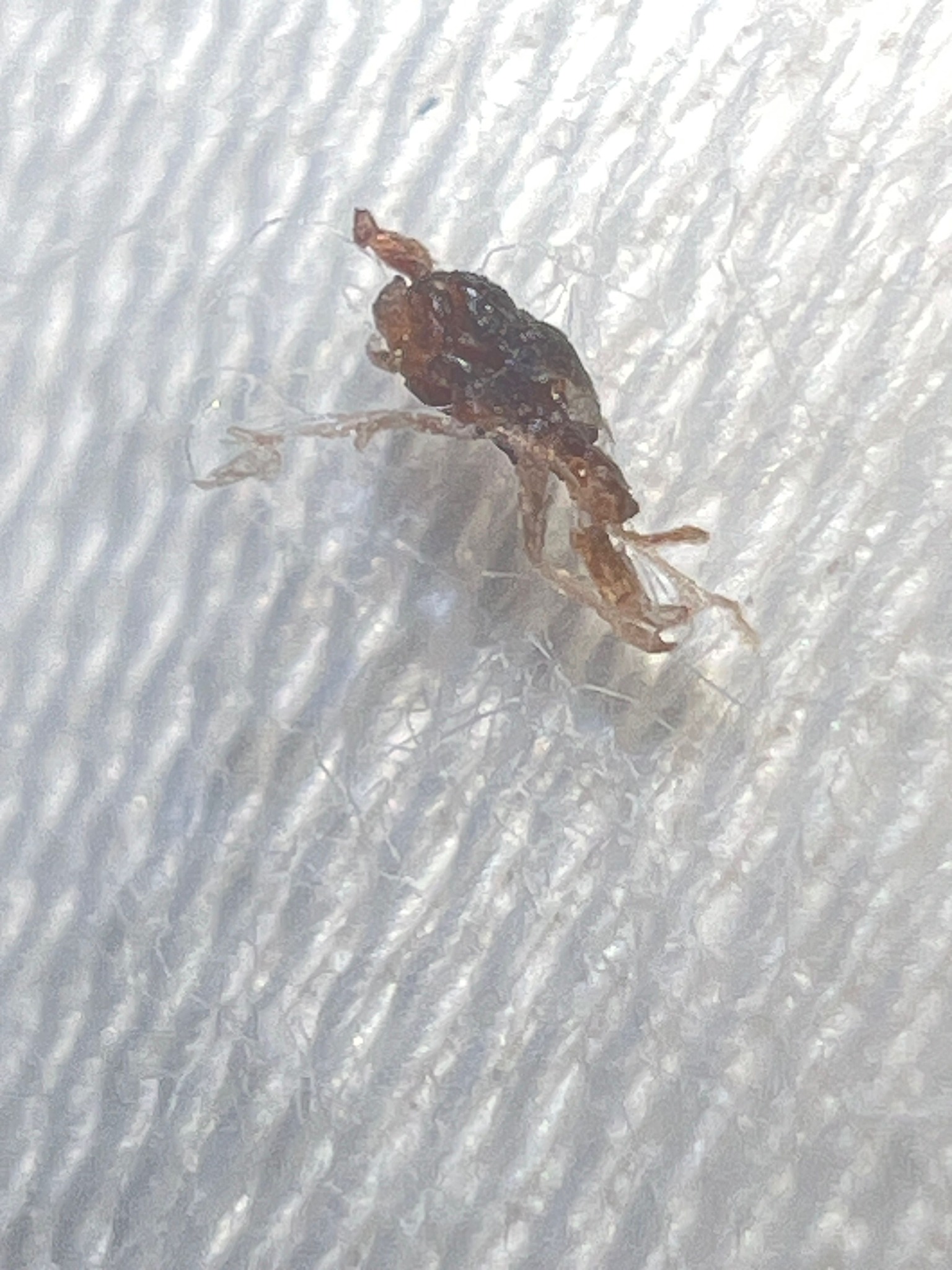
Pubic louse
Scientific Name: Pthirus pubis
Order & Family: Order: Psocodea, Family: Pthiridae
Size: 1.1 mm to 1.8 mm (roughly the size of a pinhead)
Natural Habitat
Exclusively found on humans; primarily inhabits the pubic area but can also be found in other coarse body hair like chest hair, eyebrows, or eyelashes.
Diet & Feeding
Obligate blood feeder; requires several blood meals daily from human hosts to survive.
Behavior Patterns
They are slow-moving and use specialized crab-like claws to grasp thick hair shafts. They undergo three nymphal stages before reaching adulthood and lay eggs (nits) that are glued to the base of the hair.
Risks & Benefits
Risks include intense itching (pruritus) and blue-gray skin discolorations (maculae caeruleae) caused by salivary enzymes. No known transmission of pathogens, but infestation often indicates the need for screening for other sexually transmitted infections (STIs).
Identified on: 6/10/2026