
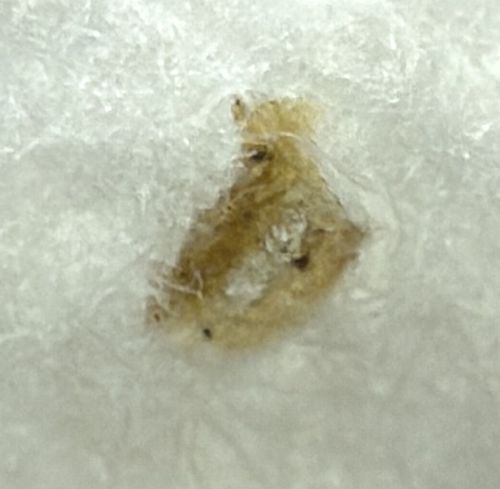
Community identification
Household Casebearer (also known as the Phereoeca uterella or Plaster Bagworm)
Phereoeca uterella
- Order & Family
- Order: Lepidoptera, Family: Tineidae
- Size
- Case size usually ranges from 8 to 13 mm in length.
Natural Habitat
Typically found indoors in humid climates, often in corners, under furniture, in bathrooms, closely observing fibers like wool, or hanging on walls.
Diet & Feeding
Larvae feed on old spider webs, silk, wool, human hair, pet fur, dead insect parts, and sometimes fibers from clothing or carpets.
Behavior Patterns
The larva builds a flattened, pumpkin-seed-shaped protective case made of silk and debris (sand, soil, insect parts) which it carries around. It can retract fully inside when threatened. It eventually pupates inside this case.
Risks & Benefits
Generally harmless to humans (does not bite or sting). Considered a minor household pest because they can damage wool or biological fibers, but they help clean up old cobwebs.