
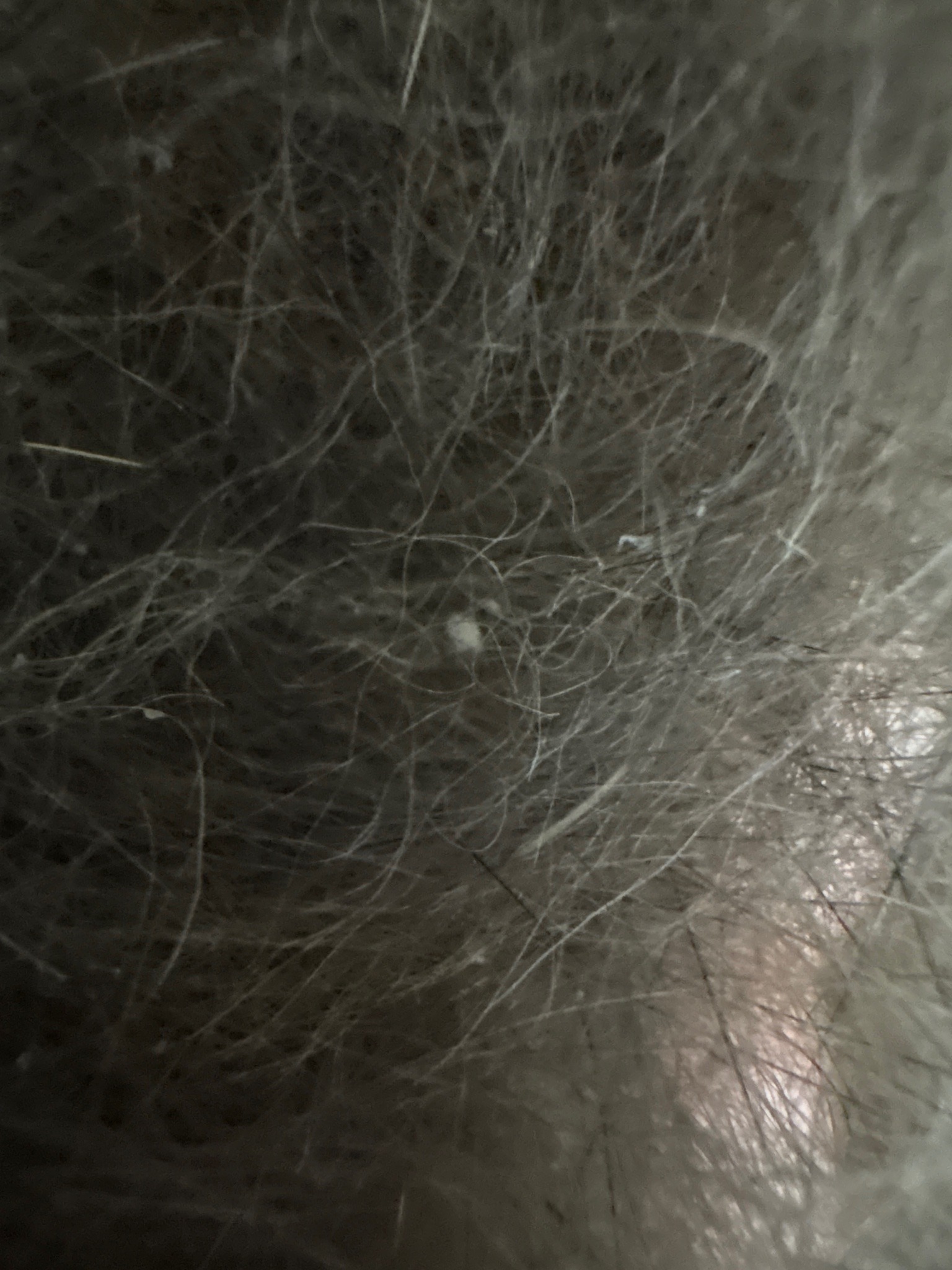
Community identification
Louse Nit
Pediculus humanus capitis (Egg)
- Order & Family
- Order: Psocodea; Family: Pediculidae
- Size
- Approximately 0.8 mm long, about the size of a knot in thread.
Natural Habitat
Human scalp and hair, usually glued firmly to hair shafts close to the skin for warmth.
Diet & Feeding
Nits do not eat; however, once they hatch into nymphs (lice), they feed on human blood.
Behavior Patterns
The female louse lays eggs (nits) and attaches them to the hair shaft with a waterproof, glue-like substance. Eggs hatch in 8 to 9 days.
Risks & Benefits
Risks include intense itching, scalp irritation, and potential secondary skin infections from scratching. They provide no ecosystem benefits and are considered parasitic pests.