
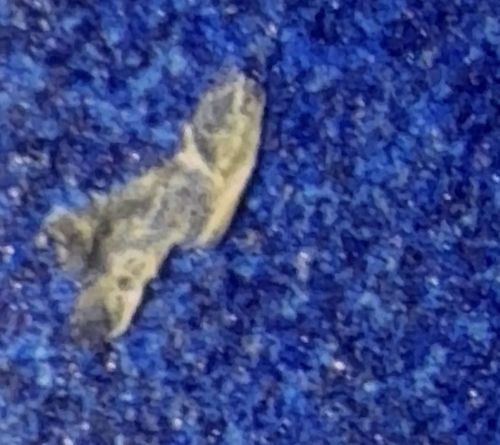
Case-bearing Clothes Moth Larva (or Case)
Tinea pellionella
- Order & Family
- Lepidoptera: Tineidae
- Size
- Larvae grow to about 6-10 mm (0.25-0.4 inches) in length; adult moths are similarly small with a wingspan of 9-16 mm.
Natural Habitat
Typically found indoors, especially in dark, undisturbed areas like closets, under furniture, in carpets, or near stored biological materials (wool, fur, feathers).
Diet & Feeding
The larvae feed on keratin-rich animal fibers such as wool, fur, silk, feathers, felt, and leather. They may also consume pet hair, dust bunnies, and occasionally synthetic fibers if soiled with food or sweat.
Behavior Patterns
Unlike the webbing clothes moth, the case-bearing larva carries a silken case around with it as it moves and feeds, withdrawing inside when disturbed. It enlarges this protective case as it grows, incorporating fibers from its food source. They tend to crawl up vertical surfaces (walls) when ready to pupate.
Risks & Benefits
Risks: They are a significant household pest that causes damage to clothing, rugs, upholstery, and tapestries by eating irregular holes in fabrics. Benefits: In nature, they help break down animal matter, but indoors they offer no benefits and are destructive.