Pubic Louse (Crab Louse)
Scientific Name: Pthirus pubis
Order & Family: Order: Phthiraptera, Family: Pthiridae
Size: 1.1 to 1.8 millimeters (smaller than a sesame seed)
Natural Habitat
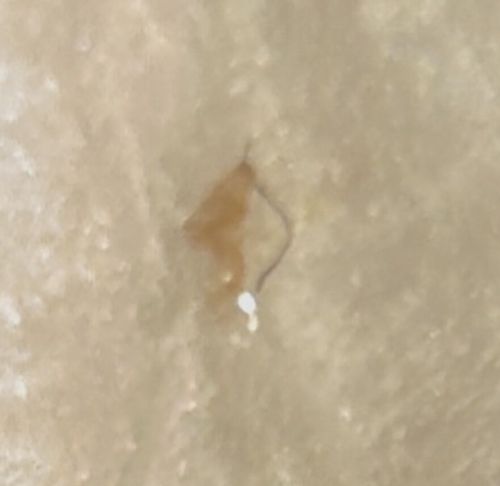
Exclusively inhabits coarse human body hair, primarily in the pubic region, but can also be found in eyelashes, eyebrows, beard hair, and armpit hair.
Diet & Feeding
Hematophagous (feeds exclusively on human blood)
Behavior Patterns
They grasp hair shafts with specialized claws that resemble crab pincers. They are relatively immobile compared to head lice but move slowly along hairs to feed. Their life cycle includes nit (egg), nymph, and adult stages, taking about 3-4 weeks.
Risks & Benefits
Risks: Causes intense itching (pruritus) and skin irritation (pediculosis pubis). Scratching can lead to secondary bacterial infections. They are transmitted primarily through sexual contact, though sometimes through fomites like bedding or towels. Benefits: None known; they are obligate parasites.
Identified on: 2/12/2026