Human Scabies Mite
Scientific Name: Sarcoptes scabiei var. hominis
Order & Family: Order: Sarcoptiforms, Family: Sarcoptidae
Size: Microscopic; females are approximately 0.30–0.45 mm long, males are half that size.
Natural Habitat
The epidermis of human skin; they can survive off a host for 48-72 hours.
Diet & Feeding
The mites feed on skin cells and subcutaneous fluids by dissolving them with enzymes.
Behavior Patterns
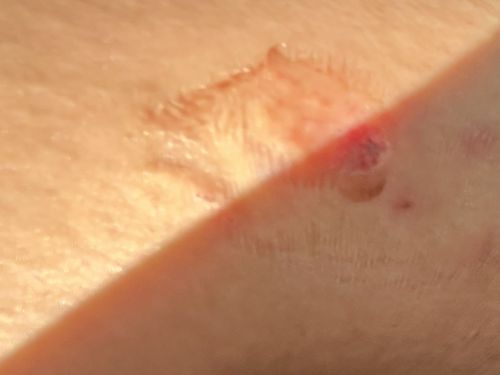
Fertilized females burrow into the stratum corneum of the skin to lay eggs, creating linear or S-shaped tracks. They are most active and itchy at night.
Risks & Benefits
Risks: Causes scabies, a highly contagious skin infestation characterized by intense itching, rashes, and potential secondary bacterial infections like impetigo. There are no known benefits to humans or the ecosystem.
Identified on: 3/11/2026