Crab louse (or Pubic louse)
Scientific Name: Pthirus pubis
Order & Family: Order: Psocodea (formerly Anoplura); Family: Pthiridae
Size: 1.1 to 1.8 millimeters in length
Natural Habitat
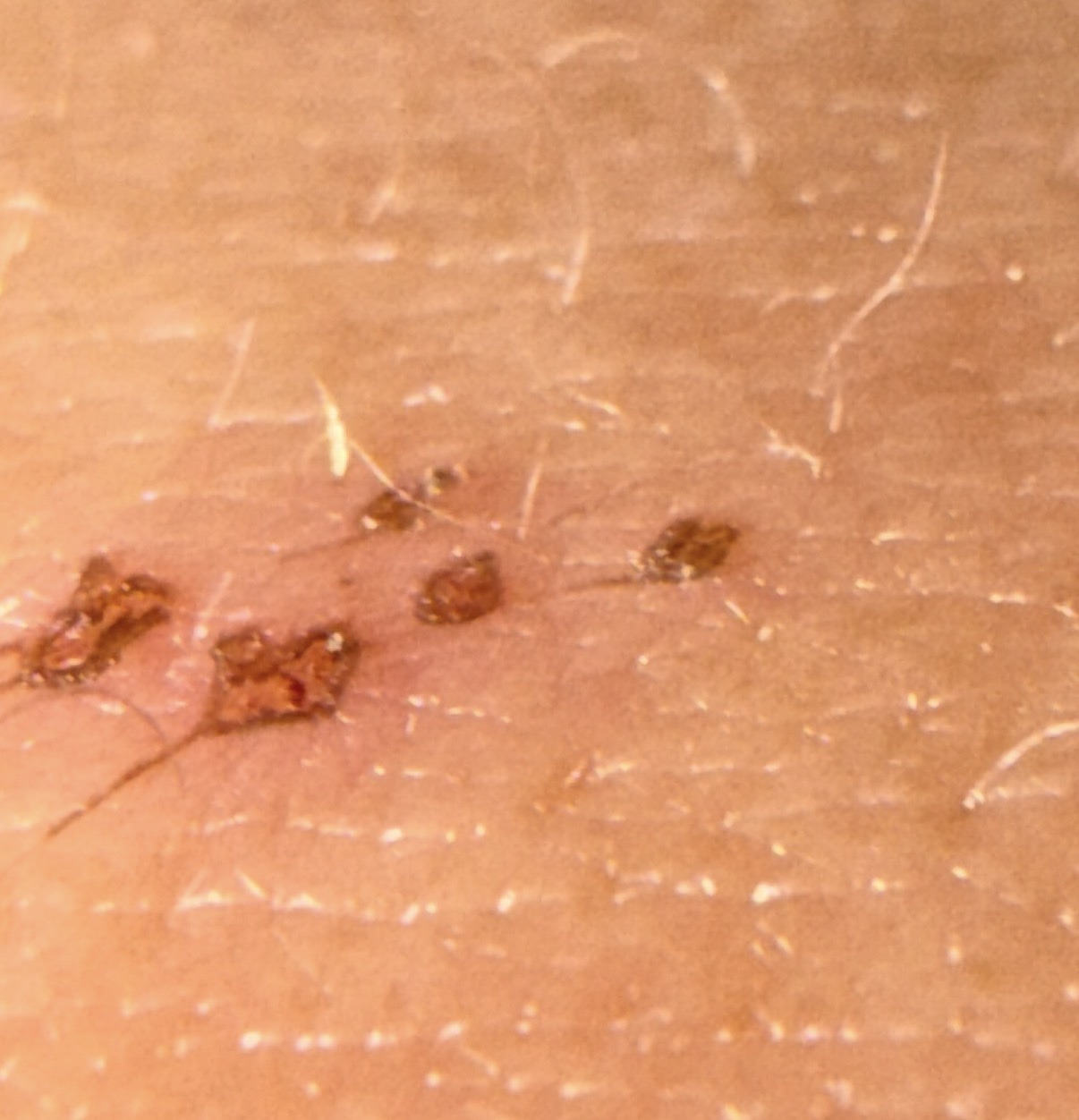
Typically found in the coarse hair of the human pubic and anal regions, but can occasionally inhabit eyelashes, armpits, or chests.
Diet & Feeding
Strictly hematophagous; they feed exclusively on human blood several times a day.
Behavior Patterns
They are slow-moving and use specialized claw-like legs to grasp thick hair shafts. They cannot jump or fly and generally spend their entire life cycle (approx. 3 weeks) on a single host. Transmission occurs primarily through close physical or sexual contact.
Risks & Benefits
Risks include intense itching (pruritus) caused by an allergic reaction to their saliva and potential secondary skin infections from scratching. They are not known to transmit major pathogens but serve as a diagnostic indicator for potential exposure to other STIs.
Identified on: 7/1/2026