
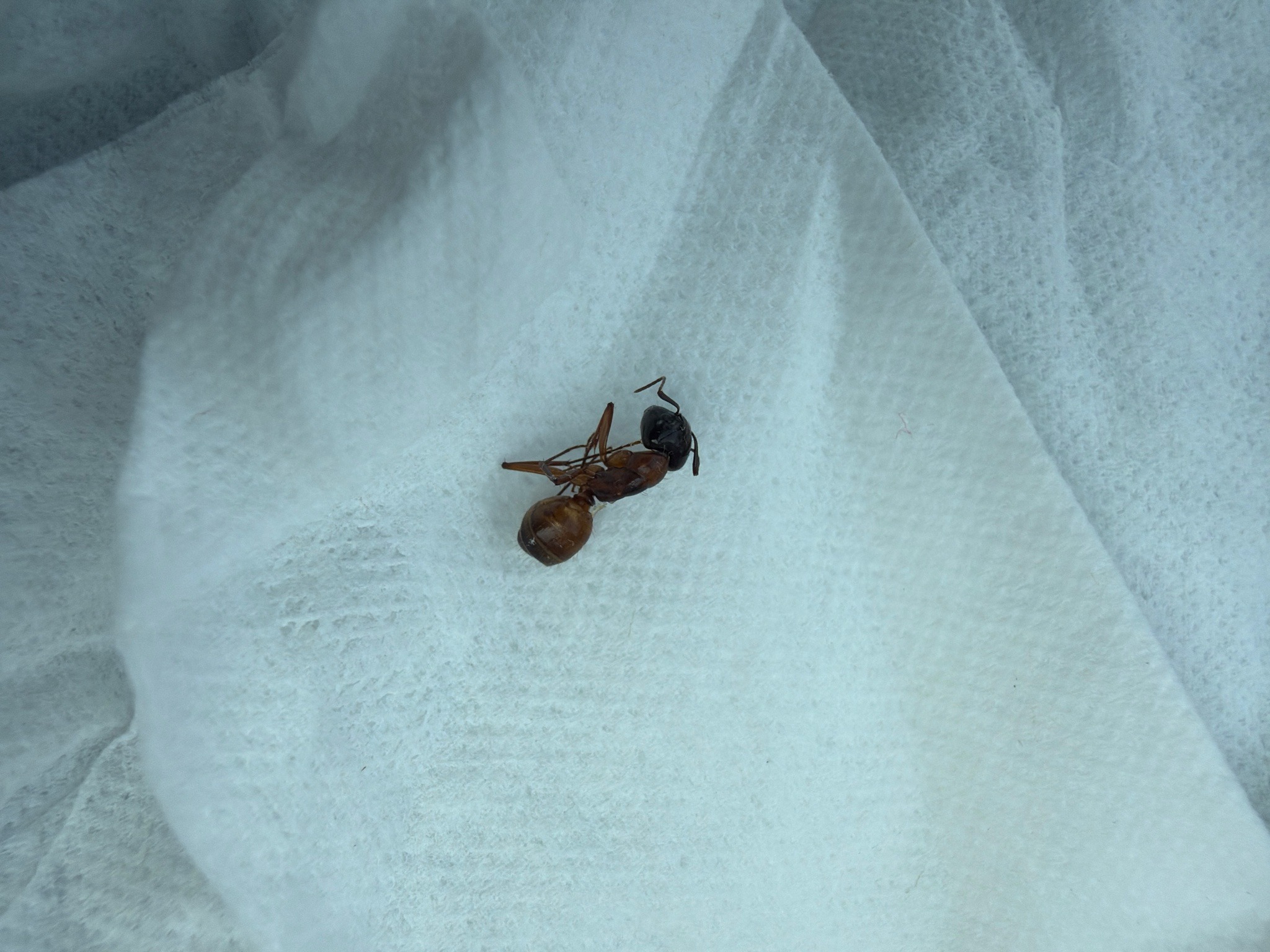
Community identification
Carpenter Ant
Camponotus species
- Order & Family
- Hymenoptera: Formicidae
- Size
- 6 to 25 mm (0.24 to 1 inch), with queens being the largest.
Natural Habitat
Found in both forest ecosystems and urban areas, typically nesting in moist or decaying wood, hollow tree limbs, or structural timbers in buildings.
Diet & Feeding
Omnivorous; they consume protein sources like dead insects and honeydew from aphids, but do not actually eat the wood they excavate.
Behavior Patterns
Nocturnal foragers that create smooth galleries inside wood for nesting. They exhibit a complex social structure with specialized castes and communicate via pheromones.
Risks & Benefits
Benefits the ecosystem by aiding in the decomposition of wood, but can cause structural damage to homes if colonies are established in building timbers. They can bite if handled but do not sting.