
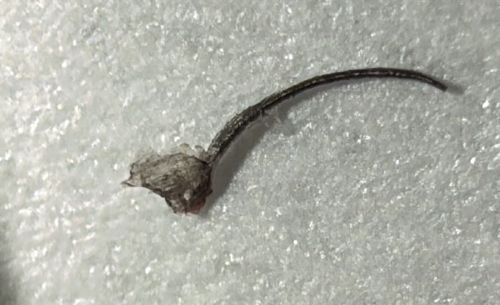
Rat-tailed Maggot
Eristalis tenax (larval form)
- Order & Family
- Diptera (True Flies) / Syrphidae (Hoverflies)
- Size
- Body measures approximately 3/4 inch (2 cm), but the telescopic breathing tube ('tail') can extend up to 6 inches (15 cm) to reach the surface.
Natural Habitat
Stagnant, oxygen-depleted water sources, particularly those rich in organic matter. Common locations include sewage lagoons, cesspools, drain catch basins, and waterlogged manure piles.
Diet & Feeding
Filter feeder; consumes decaying organic matter, bacteria, and microscopic particles found in the polluted water where it lives.
Behavior Patterns
The most notable behavior is the use of its long, snorkel-like tail (siphon) to breathe atmospheric air while submerged in oxygen-poor liquids. Once fully grown, they leave the water to pupate in drier locations before emerging as adult Hoverflies (Drone Flies), which mimic honeybees.
Risks & Benefits
Generally harmless to humans; they do not bite or sting. However, accidental ingestion can cause temporary intestinal myiasis. In their ecosystem, they are beneficial decomposers in the larval stage and important pollinators as adult flies.