
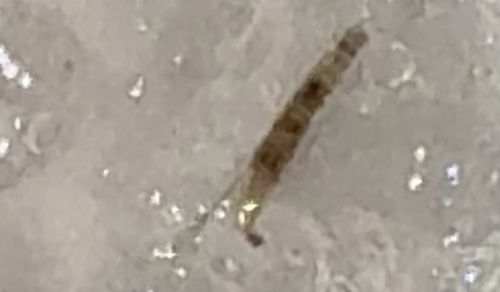
Drain Fly Larva (also known as Moth Fly Larva or Sewer Gnat Larva)
Psychoda spp. / Clogmia albipunctata
- Order & Family
- Order: Diptera (True Flies), Family: Psychodidae
- Size
- Typically 3 to 10 millimeters (0.1 to 0.4 inches) in length
Natural Habitat
Found in moist, organic-rich environments such as bathroom drains, sewage treatment beds, muddy soil, or decaying organic matter. They thrive in the slime film that builds up inside drains.
Diet & Feeding
Feeds on decaying organic matter, algae, bacteria, and fungi found in the gelatinous slime (biofilm) lining drains and pipes.
Behavior Patterns
These larvae are aquatic or semi-aquatic but do not swim well; they crawl through the sludge. They undergo complete metamorphosis (egg, larva, pupa, adult). Adults are weak fliers often seen resting on bathroom walls.
Risks & Benefits
Benefits: They help decompose organic matter in drains. Risks: While they do not bite or sting, they are considered nuisance pests and can mechanically transmit bacteria from unsanitary drain environments to other surfaces in the home. Large infestations can indicate a plumbing leak or serious clog.