
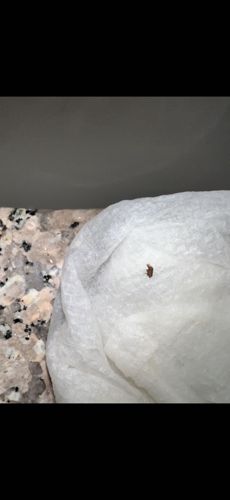
Community identification
Dog Flea
Ctenocephalides canis
- Order & Family
- Siphonaptera, Pulicidae
- Size
- 1.0 - 2.5 mm
Natural Habitat
Inhabits the fur and skin of host animals like dogs and cats, as well as carpets, bedding, and floor cracks in homes.
Diet & Feeding
Obligatory hematophages; adults feed exclusively on the blood of mammals, while larvae consume organic debris and adult flea feces (flea dirt).
Behavior Patterns
Wingless, laterally flattened insects that move by jumping long distances; they undergo complete metamorphosis (egg, larva, pupa, adult) and can remain dormant in cocoons for months.
Risks & Benefits
Causes itching and allergic dermatitis in pets and humans; serves as an intermediate host for tapeworms (Dipylidium caninum) and can transmit various bacterial pathogens.