
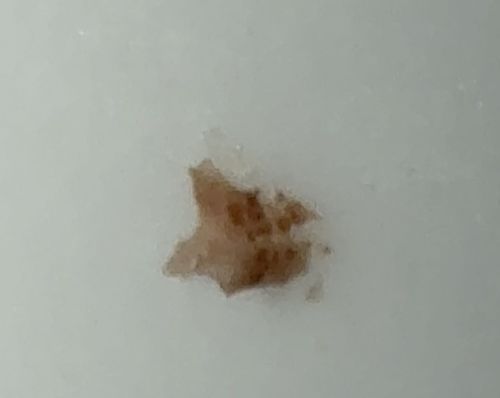
Lace Bug Nymph (likely)
Corythucha spp. (most likely genus)
- Order & Family
- Order: Hemiptera, Family: Tingidae
- Size
- Nymphs are typically 1-2 mm in length.
Natural Habitat
Found on the underside of deciduous tree leaves (like sycamore, oak, azalea), often dropping onto outdoor furniture or surfaces below infested trees.
Diet & Feeding
Sap-feeder; they use piercing-sucking mouthparts to extract fluids from plant leaves, causing stippling or bleaching.
Behavior Patterns
Nymphs cluster together on leaf undersides. They are wingless and often covered in spines or excretions (giving a 'dirty' appearance) as a defense mechanism. They go through five molts before adulthood.
Risks & Benefits
Risks: Can be a nuisance pest to ornamental plants causing aesthetic damage (chlorosis). While not parasites, they are known to accidentally 'bite' humans when falling out of trees, causing a sharp, surprisingly painful prick often followed by a small red welt. Benefits: Part of the food web for predatory insects like ladybugs.