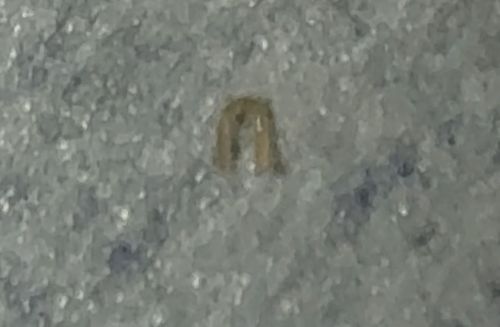
Lice nit (Empty egg casing)
Scientific Name: Pediculus humanus capitis (Head louse)
Order & Family: Order: Phthiraptera, Family: Pediculidae
Size: Approximately 0.8 mm by 0.3 mm (oval shaped)
Natural Habitat
Exclusively found in human hair, typically located close to the scalp; nits adhere firmly to the hair shaft.
Diet & Feeding
Nits themselves do not eat; they are the egg stage. The hatched nymphs and adults feed on human blood drawn from the scalp.
Behavior Patterns
Nits are stationary and glued to hair shafts. Once the nymph hatches (usually within 7-10 days), the casing remains attached and appears white or translucent, unlike viable eggs which are darker.
Risks & Benefits
They pose no direct benefits. Risks include severe itching, scalp irritation, and secondary bacterial infections from scratching. They spread easily through direct head-to-head contact.
Identified on: 2/12/2026