Pubic Louse (Crab Louse)
Scientific Name: Pthirus pubis
Order & Family: Order: Phthiraptera, Family: Pthiridae
Size: Approximately 1.1 to 2.0 millimeters in length (smaller than the head louse).
Natural Habitat
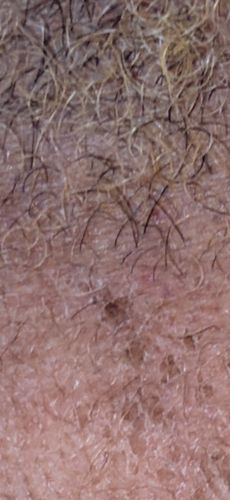
Exclusively found on human coarse hair, primarily in the pubic region, but occasionally on eyebrows, eyelashes, beard, mustache, chest, or armpit hair.
Diet & Feeding
Hematophagous (blood-feeders); they feed exclusively on human blood by biting the skin.
Behavior Patterns
These lice are parasitic insects that grasp coarse hairs with their crab-like claws. They are relatively immobile, often staying attached to a single hair while feeding. Their life cycle includes nit (egg), nymph, and adult stages, completed entirely on the host.
Risks & Benefits
Risks: They cause intense itching (pruritus) due to an allergic reaction to their saliva. Secondary bacterial infection can occur from scratching. They are spread primarily through sexual contact or shared bedding/towels. Benefits: None; they are obligate parasites.
Identified on: 3/3/2026