
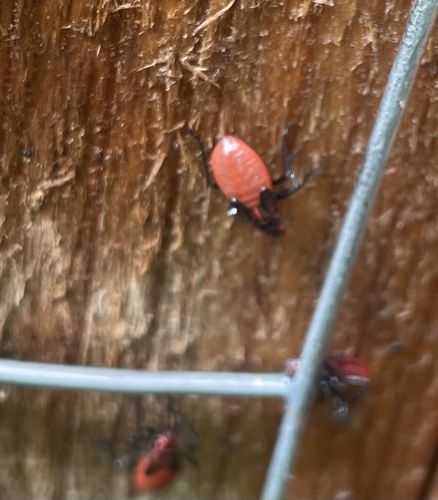
Boxelder Bug nymph
Boisea trivittata
- Order & Family
- Order: Hemiptera, Family: Rhopalidae
- Size
- Nymphs vary from 1.3 mm to 10 mm as they grow; adults reach approximately 12.5 mm (1/2 inch).
Natural Habitat
Commonly found on boxelder trees, maple trees, and ash trees; often seen on the sunny sides of buildings, fences, and rocks during the transition from autumn to winter.
Diet & Feeding
Herbivorous; they use piercing-sucking mouthparts to feed on the sap from leaves, flowers, and seeds of host trees, primarily the boxelder tree.
Behavior Patterns
Nymphs are bright red and lack full wings. They are highly gregarious, often clustering in large numbers. In autumn, they seek out cracks and crevices in human structures to over-winter in a dormant state.
Risks & Benefits
They are considered a nuisance pest rather than a threat. They do not bite or sting and do not cause significant damage to healthy trees. However, they can leaves stains on surfaces with their excrement and may emit a foul odor if crushed.