
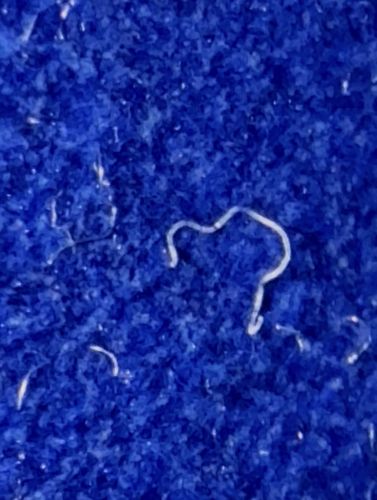
Horsehair Worm (also known as Gordian Worm)
Gordius sp. (part of the Phylum Nematomorpha)
- Order & Family
- Order: Gordioidea; Family: Gordiidae
- Size
- Typically extremely long and thin, ranging from 4 to 14 inches (10 to 35 cm) or more in length, but only about 1/25 to 1/16 inch in diameter (resembling a hair).
Natural Habitat
Adults are free-living in freshwater environments such as puddles, swimming pools, troughs, streams, and ponds. Larvae are parasitic within terrestrial insects.
Diet & Feeding
Adults do not feed; they rely on stored energy. Larvae are internal parasites that absorb nutrients from their insect hosts (commonly crickets, grasshoppers, katydids, and beetles).
Behavior Patterns
The most notable behavior is their parasitic life cycle. The larvae develop inside an insect host. When mature, the worm manipulates the host's behavior to seek out water, at which point the worm bursts out of the host to enter the aquatic environment for mating. They are often found creating tangled knots (Gordian knots) with other worms.
Risks & Benefits
They pose no risk to humans, pets, or plants; they cannot infect people. They are considered beneficial because they are natural parasites of common pests like crickets, cockroaches, and grasshoppers, helping to control these insect populations.