Itch mite (Scabies mite)
Scientific Name: Sarcoptes scabiei
Order & Family: Order: Sarcoptiformes, Family: Sarcoptidae
Size: Approximately 0.3 to 0.45 mm long (microscopic; usually invisible to the naked eye).
Natural Habitat
The epidermis (outer layer) of human skin worldwide.
Diet & Feeding
Skin cells (corneocytes) and extracellular fluid.
Behavior Patterns
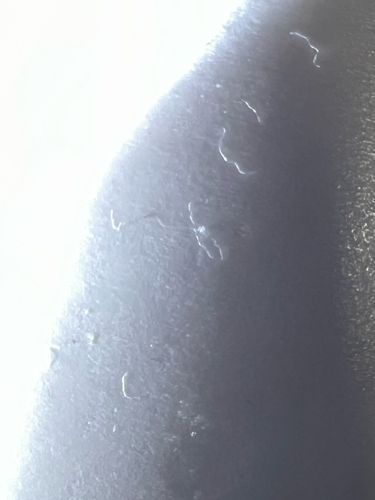
The female mite burrows into the upper layer of the skin to lay eggs. This burrowing creates the characteristic wavy, raised lines seen in the image. The eggs hatch, and larvae migrate to the skin surface to mature and repeat the cycle.
Risks & Benefits
Risks: Causes scabies, a highly contagious skin infestation characterized by intense itching (especially at night) and a pimple-like rash. Untreated, it can lead to secondary skin infections like impetigo from scratching. Benefits: None to humans or the ecosystem; strictly a parasite.
Identified on: 2/20/2026