Louse Egg (Nit)
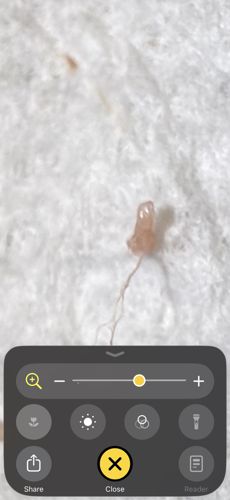
Scientific Name: Pediculus humanus capitis (Egg stage)
Order & Family: Order: Psocodea (formerly Phthiraptera), Family: Pediculidae
Size: Approximately 0.8 mm in length (about the size of a knot in thread).
Natural Habitat
Found exclusively on human hair, primarily the scalp, and occasionally eyelashes or eyebrows. They are often found near the nape of the neck and behind the ears.
Diet & Feeding
In the egg stage, they do not eat. Once they hatch into nymphs, they feed on human blood multiple times a day.
Behavior Patterns
The female louse glues eggs to the hair shaft with a waterproof cement-like substance. Eggs take about 6 to 9 days to hatch. The empty egg case (nit) remains attached to the hair shaft even after the nymph emerges.
Risks & Benefits
Risks include intense itching (pruritus) as an allergic reaction to louse saliva, secondary bacterial skin infections from scratching, and social stigma. They do not spread disease. They provide no known ecological benefits to humans.
Identified on: 12/26/2025