
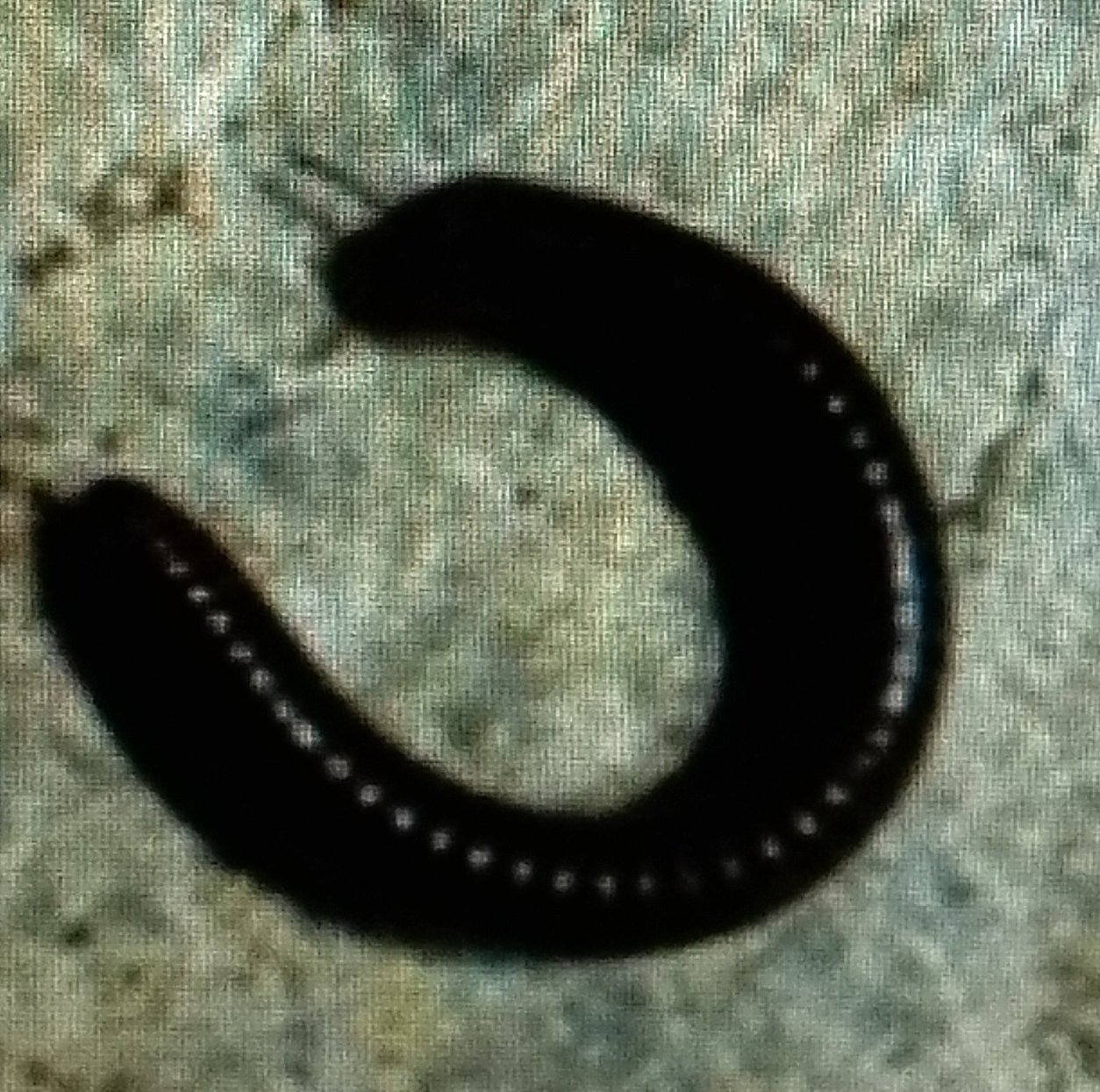
Community identification
Indian Giant Millipede
Thyropygus alleifer
- Order & Family
- Order Spirostreptida, Family Harpagophoridae
- Size
- 150mm to 250mm (6 to 10 inches) in length
Natural Habitat
Found in tropical and subtropical environments across South India, typically in leaf litter, under logs, or in moist soil in gardens and forests.
Diet & Feeding
Detritivore, primarily feeding on decaying organic matter, fallen leaves, and rotting wood, which aids in nutrient cycling.
Behavior Patterns
Generally nocturnal and slow-moving. They curl into a tight spiral as a defensive mechanism to protect their soft underside and may secrete a pungent liquid or gas (cyanogenic compounds) from ozopores when threatened.
Risks & Benefits
Benefits include critical soil enrichment through composting organic waste. Risks to humans are minimal, but defensive secretions can cause mild skin irritation or staining, and can be dangerous if they come into contact with eyes.